PE-22-28 is a synthetic peptide under investigation for its possible neuroprotective and regenerative effects in laboratory research.
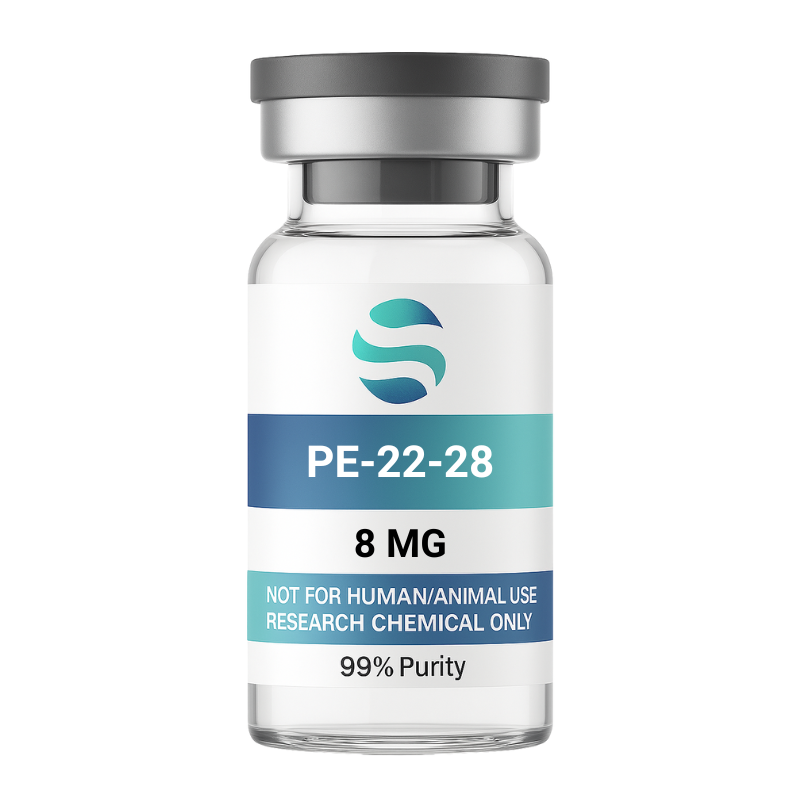
PE-22-28 8 MG
$50.00
PE-22-28 is a synthetic seven-amino-acid peptide fragment derived from spadin, which is a natural peptide originating from the sortilin protein. Its amino acid sequence is Gly-Val-Ser-Trp-Gly-Leu-Arg (GVSWGLR), with a molecular formula of C35H55N11O9 and a molecular weight of approximately 773.9 Da.
Research involving PE-22-28 commonly focuses on:
• Potent and selective antagonism of the TREK-1 (K2P2.1) potassium channel, which is expressed in neuronal and cardiac tissues and plays roles in mood regulation, neurogenesis, stroke recovery, and metabolic signaling.
• Demonstrated rapid antidepressant activity in rodent models, showing significant behavioral improvements and reduced depressive-like symptoms within four days of administration.
• Enhancement of hippocampal neurogenesis, increasing markers like BrdU, BDNF, PSD-95, and CREB, which are associated with synaptogenesis and neural plasticity.
• Neuroprotective effects including reduction of neuronal apoptosis in ischemic stroke models and improved cognitive and motor outcomes.
• High specificity for TREK-1 with minimal off-target effects on related potassium channels, offering targeted modulation of neuronal excitability relevant to depression, pain perception, and anesthesia.
PE-22-28 is provided as a high-purity lyophilized powder for laboratory research use only (RUO). It is intended exclusively for preclinical and in vitro research and is not approved for clinical or therapeutic use in humans or animals.
Product details:
• Synonyms: PE-22-28, Spadin analog, TREK-1 antagonist
• Purity: ≥98% (HPLC verified)
• Molecular Formula: C35H55N11O9
• Molecular Weight: 773.9 Da
• Amino Acid Sequence: Gly-Val-Ser-Trp-Gly-Leu-Arg (GVSWGLR)
• Appearance: White to off-white lyophilized powder
This peptide is studied extensively as a rapid-acting antidepressant candidate with neurogenic and neuroprotective properties in neuroscience and psychiatric research
In stock
Related products
-
-
-
 Price range: $60.00 through $145.00 Select options This product has multiple variants. The options may be chosen on the product page
 -
-
-