PNC-27 is a synthetic peptide researched for its selective cytotoxicity against cancer cells in vitro, with ongoing studies into its mechanism of action.
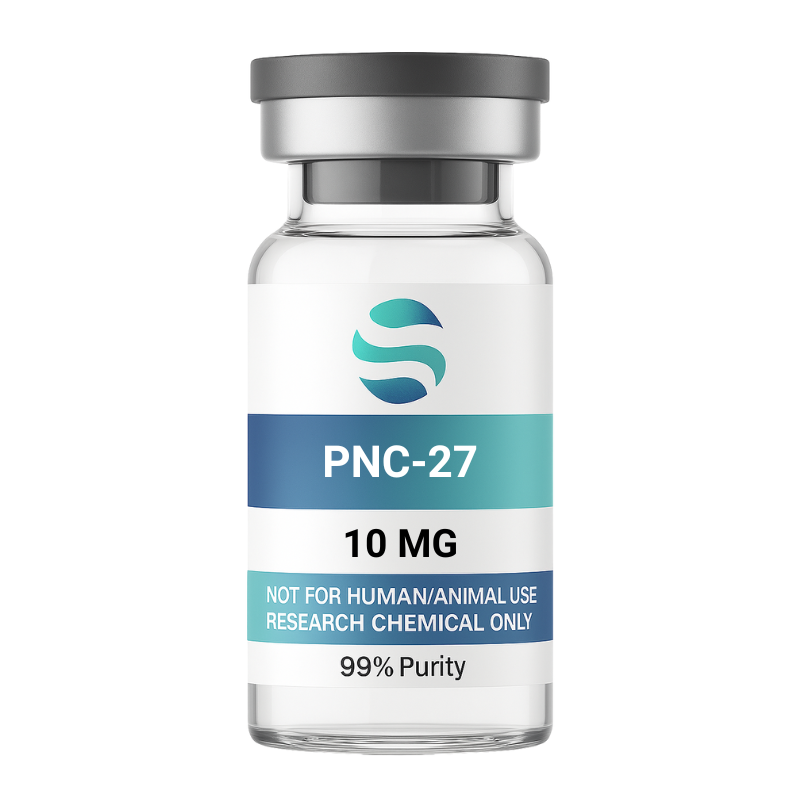
PNC-27 10 MG
$160.00
PNC-27 is a 32-amino-acid chimeric peptide designed as an anticancer agent, combining a p53 protein domain (residues 12-26) that binds HDM-2 (also known as MDM2) with a cell-penetrating leader sequence. The peptide selectively targets cancer cells by binding to HDM-2 proteins expressed on their plasma membranes, which leads to the formation of transmembrane pores that induce cancer cell lysis and necrosis without affecting normal cells.
Key characteristics and mechanisms of PNC-27:
• The HDM-2 binding domain of PNC-27 adopts a conformation closely resembling the natural p53 peptide segment, enabling high-affinity binding to HDM-2.
• The leader sequence extends outward, facilitating insertion into the membrane and pore formation in cancer cells, disrupting their membranes selectively.
• The peptide’s amphipathic alpha-helix-loop-alpha-helix structure is similar to other membrane-active peptides known to form pores by interacting with membrane lipids and proteins.
• PNC-27 shows selective cytotoxicity to various cancer cell types, inducing rapid cell death through necrosis rather than apoptosis.
• The peptide forms complexes with membrane-bound HDM-2, which are believed to line the pores in cancer cell membranes, essential to its unique membranolytic action.
• No pores are formed in untransformed or normal cells due to the lack or low expression of HDM-2 on their plasma membranes.
PNC-27 is offered as a lyophilized powder for research use only (RUO) and is not intended for therapeutic or diagnostic applications in humans or animals.
Product details:
• Synonyms: PNC-27, p53-derived peptide HDM-2 binder
• Peptide Length: 32 amino acids
• Molecular Properties: Amphipathic alpha-helix-loop-alpha-helix structure
• Mechanism: Selective pore formation via HDM-2 binding on cancer cells
• Appearance: White to off-white lyophilized powder
PNC-27 is extensively studied for its selective anticancer capabilities through membrane pore formation and disruption of tumor cell survival pathways.
In stock
Related products
-
-
-
 Price range: $125.00 through $425.00 Select options This product has multiple variants. The options may be chosen on the product page
 -
 Price range: $60.00 through $125.00 Select options This product has multiple variants. The options may be chosen on the product page
 -
-